






























We tend to think of the economy as a distant, big beast; a creature of green flickering numbers on Wall Street or massive textbooks. That is a misconception. Everything is part of economics. Your bank account is only the tip of the iceberg; the real economy is happening in your head every time you hit the snooze button.
Microeconomics in Actions
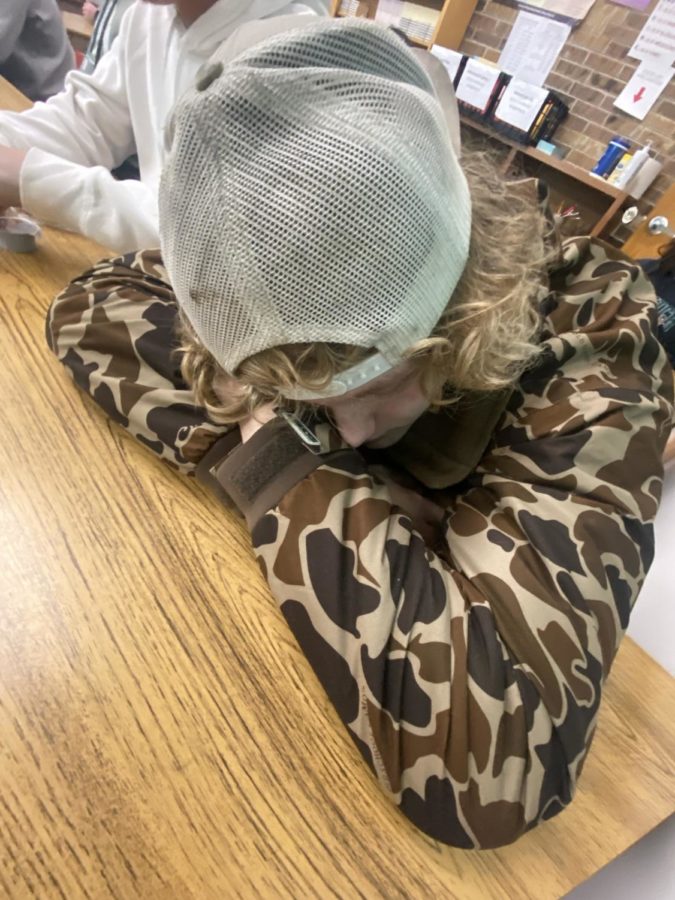
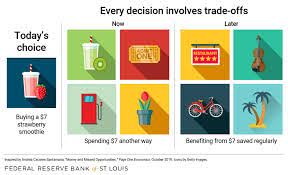
Economics can be illustrated in everyday, ordinary life, like whether we decide to hit the snooze button or get out of bed. These are small but powerful examples of economics because they are trade-offs. This is often referred to as a term called “opportunity cost,” meaning what you give up when you choose one option over another. Hit the snooze button, gain 15 minutes of sleep, but lose 15 minutes of your day. Don’t hit the snooze button and get up; gain 15 minutes, but lose the opportunity to sleep for another 15 minutes. Picking up what I’m putting down?
According to Investopedia, opportunity cost is a fundamental concept that applies not only to finances but also to how people spend their time and energy. There is an equation to calculate opportunity cost. However, this is not a math class, so I won’t be telling you. Another study from the American Psychological Association shows that people often prioritize immediate benefits over long-term benefits. Many economists refer to this as “Present Bias”. This explains irrational choices, like overspending or procrastinating. These natural human behaviors can be tied back to opportunity cost. For example, I won’t do my assignment so I can play video games and have fun. The cost gained was the video games, and the cost lost was the assignment not being done. Now, if I do my assignment instead of playing video games, the cost gained was the assignment being done, and the cost lost was being able to play video games.
YOU drive the economy more than big business does.
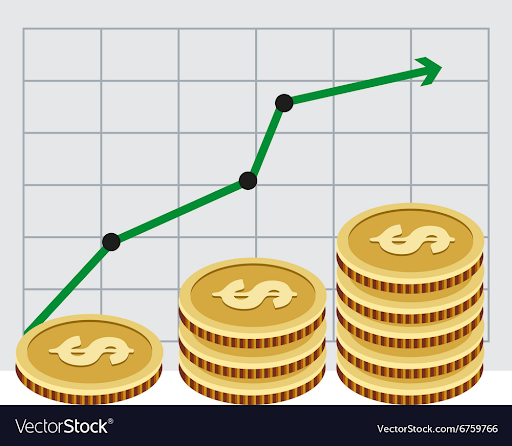
You may think that your ordinary day-to-day life decisions have no impact on the economy. You would be right, whatever you do won’t stop the world from spinning. But repeated decisions across millions of people form the foundation of the economy. For example, many individuals independently choose convenience, such as ordering food instead of making a home-cooked meal. This is a decision that millions of Americans make, which drives the economy behind fast-food chains. The U.S Bureau of Economic Analysis explains that consumer spending is the largest driver of economic activity. This proves that the spending that millions of Americans make on their daily drives the economy. According to Ted Rossman from The Bankrate, “U.S. retail sales (excluding automotive) increased 3.9% year-over-year from Nov. 1 through Dec. 21, 2025, holiday sales grew 4.1% year-over-year through November and December 2025.” This quote shows that around the holiday times and the Christmas gift shopping time, the money that people spend goes back into the economy, making the GDP worth more.
Emotions in Economics.
Emotions can influence YOUR economics. How so? Good question! Self-control is most commonly known as the ability to fight unnecessary temptations. Self- control plays a critical role in economic decision-making because it determines whether people prioritize immediate satisfaction or long-term benefits. Stanford University conducted the “Marshmallow experiment”. In this experiment, they offered a piece of candy to kids to eat right now, or they were offered 2 pieces of candy if they waited 15 minutes. Those who waited longer experienced delayed gratification, and they showed better life outcomes, better SAT scores, and lower BMI. Delayed graduation is tied to self-control. The better self-control you have, the more likely you are to wait for the delayed gratification.
There is more to economics than the economy. This article is only scratching the surface of what exists in economics. There is a ton of knowledge in the field of economics. Explore it, sky’s the limit.