







































From The Week article “Downed U.S. airmen rescued in daring operation” written by THE WEEK US.
“At the president’s direction, we deployed both human assets and exquisite technologies,” Ratcliffe said, calling it “a daunting challenge, comparable to hunting for a single grain of sand in the middle of a desert,” said Morgan Phillips of Fox News.
Hundreds of U.S. forces were sent into southwestern Iran to undergo a high-stakes 36-hour hunt for a U.S. Airman after his aircraft was shot down.
What Happened
“The US rescued a missing F-15E airman deep inside Iran with an incredibly complex and daring mission that involved SEAL Team 6, a CIA ruse, a hastily constructed forward airstrip in hostile territory, and patrols of friendly aircraft that gave the Air Force colonel cover,” said Anthony Blair of the New York Post.
On Friday, April 3, 2026 a F-15E Strike Eagle was shot down in southwestern Iran while undergoing an Iranian air strike which forced both pilots to eject. One of the pilots was rescued within hours of ejection whereas the rescue of the second pilot, a Colonel and Weapons Systems Officer (WSO) in the U.S. Air Force, required an intense and strategic 36-hour search involving forces such as the CIA and SEAL Team Six.
Anthony Blair of the New York post shared that “the unnamed officer, who was shot down on Good Friday in southwestern Iran, hid out in the Zagros Mountains and managed to climb a 7,000-foot ridge to evade capture for 36 hours, with limited modes of self defense, while American MQ-9 Reaper drones pounded nearby Iranian forces with missiles if they got close to his position, according to reports.”
The Iranian government quickly sent their citizens on the search for the downed Colonel with a £50,000-£60,000 ($60,000–$66,100) bounty. This stressed an even greater sense of urgency for U.S. forces to try and recover the Colonel before his potential capture. This high stress situation also inspired the CIA to execute a deception campaign in which they sent false messages to Iranian officials stating that they had already rescued the Colonel.
CIA as well as SEAL Team six involvement is rare in rescue missions, but in this situation, “It depends what it is and for that type of rescue mission, the CIA likely gathered intel and briefed it out and decided which assets they needed to send out and coordinate all of it. When you get shot down you turn on your c-cell radio and it sends out a beacon and JPRC will see that and then they delegate what to do with it by looking in the area of operation to see what to do, and they will usually have a QRF (Quick Reaction Force) which in this case is probably delta force and seal team 6,” says U.S. Marine, Liam O’Keefe.
Recovering the Colonel
During the Colonel’s time stranded in Iran he was armed with only a hand gun. Luckily for him, he had undergone SERE (Survival, Evasion, Search, and Escape) training which is an extremely high-stress military program that focuses on heavily preparing soldiers to survive in hostile environments, evade enemy forces, resist interrogation, and escape captivity.
O’Keefe shared that “SERE training probably helped him survive and it teaches you concealment and how to blend in with your surroundings…without the [SERE] training, he probably just wouldn’t be as comfortable with [operating]in a high stress situation, and he was able to know things like getting to higher ground and sending the signal which made the rescue way smoother than without the SERE training.”
The Airman was well prepared for this situation in addition to those rescuing him.
“I train and we see the training for rescuing and you know that you will get a good crew out there and you feel confident that you will get rescued. You train for it non-stop so everyone is very experienced, like they do exercises where someone goes down and they activate their c-cell and were in contact with JPRC and then we’ll know where to go find them and they do like fake threats during training too to really simulate what a real life rescue mission would be like so everybody is ready and knows what to do when a real rescue mission comes up,” said O’Keefe.
This shows the intensity of training the military puts their members through and how effective it is. Each operation is carefully planned out and members of the military are prepared to save others and are confident that others are prepared to save them as well.
Concluding the Rescue
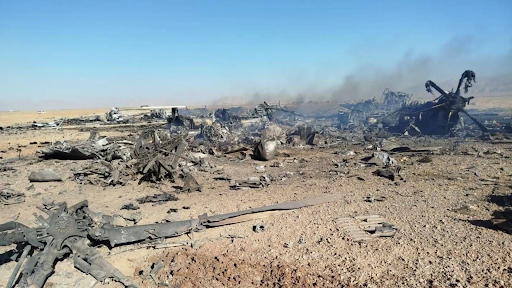
Kaia Hubbard of CBS News stated, “During the rescue mission, two transport planes were unable to take off from a remote base inside Iran and were destroyed to prevent Iran from seizing them, U.S. officials said. And on Friday, an A-10 Warthog that was part of the search operation took fire, forcing the pilot to eject over the Persian Gulf, where he was rescued.”
After the rescue concluded the U.S. intentionally destroyed two MC-13J tankers and two MH-6 helicopters to prevent Iran from gaining access to advanced, classified technology. These aircrafts experienced technical malfunctions which forced the U.S. to leave them behind in a remote location and ultimately destroy them later.
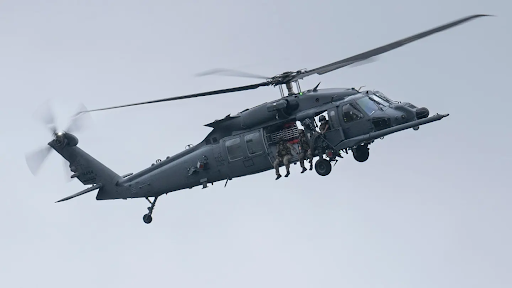
“Rescue helicopters, including HH-60W Jolly Green II aircraft, came under Iranian small-arms fire as they moved in to extract the pilot, according to U.S. officials. Crew members aboard the helicopter carrying the pilot were injured, but the aircraft was able to fly safely out of Iranian territory,” says Morgan Phillips of Fox News.
The multi-day rescue involved 155 aircrafts in total. The assets utilized included 4 bombers, 64 fighters, 48 tankers, and 13 rescue aircrafts.
After the rescue, details involving the mission had not been released, including the name of the Airman rescued.
O’Keefe shared that, “A lot of stuff we do is trying to keep it under wraps from the enemy, so they will probably release it way later especially if [there are] assets in the area, and even though one person got shot down, that probably didn’t stop the mission and it likely still happened. They have go, no-go criteria that they brief prior to a mission like if they need two f-15’s for the mission and they send three and one gets shot down they still meet their mission criteria or sometimes they say if anything gets shot down don’t go through with the mission.”
This explains why the details of the mission were kept secret, even after the mass publicity of the rescue mission.
Finally, on Sunday, April 5th the nation was relieved to hear of the Colonel’s official rescue by President Trump via social media, in which he stated “WE GOT HIM!”.
After receiving the news, the nation experienced a mixture of relief and pride. The Colonel was officially rescued from hostile territory and returned home safely, as well as everyone who went out to Iran to take part in the mission.
This whole situation proves that the U.S. has a wide range of capabilities and intelligence. Also, the military will do anything in their power to save their soldiers and to leave no man behind.