























































Stop!
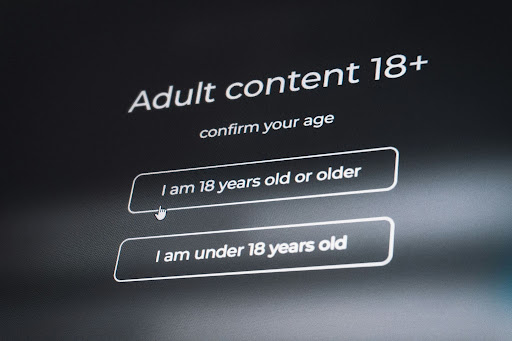
What if I told you that you needed to verify your age to access this article? Would you do it? Would you willingly scan your ID, face, credit card or all of the above? Many of us are uncomfortable with the idea, but it’s necessary, right? Age verification has been a thing before the internet, like for bars, clubs, hospitals, and even more.
Now, there are quite a long list of sites that require this verification to access quite a lot of their content, including social media like instagram, facebook, Tiktok, X and reddit, other apps like Spotify, Youtube and DIscord or even some games like Roblox. Many of these are places children often visit, but I’m confident you recognize using at least one of them.
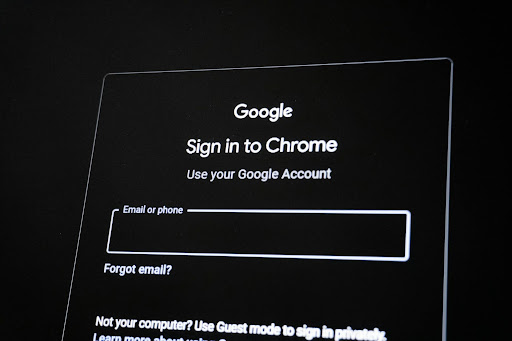
Google, for instance, might flag you as underage based on the stuff they know you are viewing. This part of stalking over you, is already creepy, but that is an argument for another day. Once you get flagged as a possible minor, your only option to be marked as an adult by their system is uploading a photo of either your government-issued license, a valid credit card from your bank, or maybe even your face, if you live in the right area. Google will then verify that the photo sent proves you are over the age of 18 and removes the photo from their database.
But is it right? I mean, they wouldn’t make us do it if we didn’t have to, right? Some, however, believe you shouldn’t actually have to. We believe you should never verify your age on the internet, and even actively avoid doing so, for your safety and privacy.
Why Media Restricts Online Access by Age
A current student of the University of Minnesota Law School, Benjamin Ayanian, admits when writing about this issue, “It’s true that the internet, despite providing benefits such as connection and broader access to information, is full of harrowing material, and that threats to children online are, sadly, ubiquitous.” Remember the name, Ayanian, we’ll be hearing more from him.
It’s pretty obvious why we restrict things by age. Childhood and adolescence are the relatively most fragile phases of life, biologically. It makes sense that we value the psychological health of our children, and nowhere in this article will I be debating that.
However, a queer Minnesota state representative, Leigh Finke, opens up to reveal other motives for age-gating. An overview can be found at the Electronic Frontier Foundation, an organization made to protect the rights of internet users. In summary, she declares that many of the reasons for age-gating are not actually protecting children, but to politically control what they can see. In fact, officials are already using age restrictions against queer youth, for example.
Writers of EFF, Rindala Alajaji, M.A., and Molly Buckley, J.D., say that while Finke was “referencing the Supreme Court case Free Speech Coalition v. Paxton, she noted that state attorneys general have been ‘almost jubilant’ about the ability to use these laws to restrict queer youth from accessing content.”
But Rep. Finke was attacked online by political and religious activists, accusing her of not wanting safety for children online, misrepresenting her argument. Humorously, “this backlash proves her point.” It reveals that political activists like those just want power over what your child sees, says or believes. This control is a red flag that your own ideologies can be legally blocked from reaching your child.
The Risks of Your Privacy and Safety
“Control rarely announces itself as domination. It enters quietly as care. It borrows the moral authority of love and fear to justify taking decisions out of your hands. It tells you it knows better because it worries more. That its vigilance is proof of devotion. That your resistance is immaturity, recklessness, or ingratitude,” writes social critic Gabby Smith, MLS/MSEd.
Unfortunately, control isn’t even the largest problem with age restrictions online. Safety is actually one of the biggest worries for online restriction due to previous data leaks and hacks of personal information. I’m sure you’ve heard of all sorts of data leaks online, but let’s take a look at something else first. What is actually at risk in age verification?
The biggest risk I could find was Persona. It is a third-party age verification tech company that uses artificial intelligence to verify biological aspects and estimate age for web companies. Persona’s files were inspected for what data might be leaked if they were hacked. Pieter Arntz from Malwarebytes reports that:
Persona collects—and can retain for up to three years—IP addresses, browser and device fingerprints, government ID numbers, phone numbers, names, faces, plus a battery of ‘selfie’ analytics like suspicious-entity detection, pose repeat detection, and age inconsistency checks. After ‘Celeste’ published their findings online, Persona CEO Rick Song said on the social media platform X: ‘We verify your identity securely, retain it for only as long as necessary on behalf of the customer, and then delete it as soon as we can.
But do you trust their words? Remember, deleting doesn’t remove the fact that it was there in the first place. Plus, with recent breaches including Discord, Coinbase, Zoom and even US Medicare, these security statements are getting less and less believable.
“The [Supreme] Court ruled that ‘no person—adult or child—has a First Amendment right to access speech that is obscene to minors without first submitting proof of age,” EFF reported on the largest piece on this issue. This helps us to understand the severity of what is happening. Maybe you could have continued, thinking that it doesn’t affect you if you’re not underage, but this is not even true anymore. Your age, nor even your amendment rights will protect you from the risks of age-gating.
Why This is Important Politically
However, even I thought it wouldn’t be that much of a problem. I assumed that our representatives would realize the dangers using blanket restrictions online, and find another solution for the possible issue of children’s access to the internet. But the problem of online safety—at any age—will not be solved by congress alone.
A newer law, the App Store Accountability Act (ASAA), was made just last year in Utah and is currently waiting for approval by congress at the federal level, and it doesn’t look good. At this point, we’re going to refer to Ayanian’s expertise on the law and what issues we might be in for.
“Among other things, the ASAA would require app stores, such as the Apple App Store and the Google Play Store, to verify user ages and mandate parental consent for users under 18.” Ayanian offers the point that this law will be affecting everyone if it goes through. Whether you are an IPhone user, or not, you will be affected when you next get apps from your app store.
“App stores already invest heavily in child safety, whereas many websites host dangerous and extreme content while evading regulation and law enforcement. … By creating such an onerous process for app store access, Congress would unwittingly push minors to more dangerous areas of the internet that are far harder to regulate.” Ayanian explains how restricting much safer options on app stores can migrate kids to darker sides of the internet using web browsers instead of apps. It works much like the 1920 prohibition of alcohol, where the demand for something previously used was quickly moved to underground trafficking and gave way to much more dangerous transactions.
It’s not that we shouldn’t prevent children from accessing harmful content. There are just better options. Parental controls exist for this reason. Sure, it will be difficult for many parents to be tech-aware enough to track every movement, but doing the right thing is never easy.
Satya Marar, LLB confirms that “monitoring a child’s online activity can be difficult, and kids often push back—arguing that limits on messaging or social media will cut them off from their peers. Even so, parents already have tools that offer more control than television ever did.”
I think it funny, too, how it’s already so much easier for parents to control what their kids see than when even most lawmakers were kids. If they wanted to watch another program, usually they would just change the channel while their parents weren’t looking. And yet, they are so eager to push out dangerous laws before refining them.
The Summary
The ASAA bill is the tipping point. If it gets passed, many more will come after and we will have a lot more to deal with on the internet than just avoiding viruses or malware. The direction our government is taking with the internet will destroy whatever positive aspects left that came from it. And parents, at least by now, need to know how to protect their children. If you genuinely don’t think you can handle keeping track of more than yourself online, then, just as a suggestion, why give them a phone in the first place? If you can find another solution that works better, great! Just don’t let congress use children as an excuse to ruin the internet for all of us. Oh, and be careful with age verification. Good luck.