













































As we enter a new age of technology, conversations across all fields are directed towards AI. But among all industries discussing where and in what ways AI should be implemented, the media industry stands out as one of the most controversial. AI film festivals and musicians on the Billboard charts, job displacement, quality erosion, and misinformation are some of the many things brought up around the topic of AI in the world of media. Consumers and producers of media alike are trying to find an acceptable place for AI, wanting to focus on its efficiency without crossing the ethical concerns many have with it.
Efficiency vs Employment
The argument generally divides itself along the lines of the positive financial value AI can bring, and then the ethical dilemmas it brings to the media. Those typically in favor of AI tend to be outside of the main stage of production and usually have jobs at an executive or management level. Their jobs focus more on design oversight, budget management, and brand partnership. While jobs in entry-mid level cover the creative process, including creating and pitching ideas, planning content, and producing it. Individuals at this level are more likely to care about AI influence in the media industry because it directly affects them. Many executives are pushing for the advancement of AI within the creative stage of media because of its ability to come up with ideas more cheaply and quickly. AI has quickly taken over many entry-level jobs typically held by humans. Journalism, Advertising, Composers, and Audio Engineers are all being replaced by AI. In December of 2024, Spotify replaced over 17% of its workers with AI, over 1500 employees were let go, and many noticed the platform’s change and commented on its “lifeless” or “automatted” feel, especially with the release of the 2024 Spotify Wrapped. (Forbes) The switch from a human workforce to AI brings up two of the main ethical concerns many people have with AI’s integration into the media industry. While those at the top of the media industry advocate for AI’s inexpensive labor and efficiency, many point out the ethical concerns with replacing an innate human industry with artificial intelligence automated from the art of others, and the compromise of quality and originality in the face of making more money.

The Value of Art and Artists
The argument against AI art goes much deeper than just employment. From the very beginning, art has been hard to define. Merriam-Webster would describe it as “the conscious use of skill and creative imagination especially in the production of aesthetic objects,” but many would argue that the definition goes much deeper than that. Musician Emma Harger describes art as “the human experience… You can’t, by definition, have art unless there’s a human behind it because you need emotions and experience and feelings and opinions and motive.” Art is a connection; it’s poetry, though not included in its official definition, many artists and even consumers of art would describe art as something much more personal and emotional than just an arrangement of colors, sounds, or words. But as subjective as the definition of art is, it’s only gotten more ambiguous with the introduction of AI. AI’s emergence into the world of media has raised questions about the negative implications AI has in art. Humans and machines can both create things, but now we ask the question whether a machine can be creative? Musician Wesly Phibbs says this: “I think by definition AI cannot create something new, its only ability is to replicate from the information that comes from its database.” Machines are only capable of remixing training data, while a human’s brain is wired to allow itself to wander towards new ideas. (National Endowment for the Arts) On top of that, the companies pushing for AI art/artists are not doing it with the belief that AI is creatively superior to human artists. The priority behind it is to save money and time by using free generative AI rather than employing an artist or team to create. Ultimately, an industry built on human experience and creativity is being stripped of all human work in pursuit of cheap and efficient outcomes.
Regulations
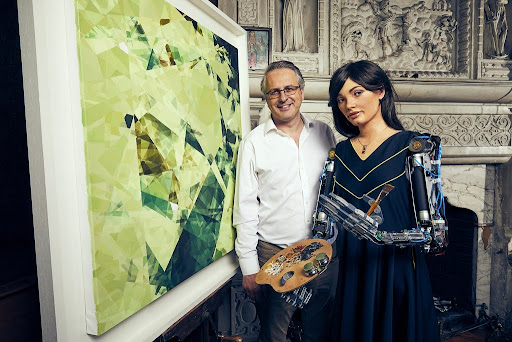
In order to balance the desire for quality products and employment, and the ability to make the creative process more efficient, there needs to be regulations. However, some might desire the expulsion of AI from all media and any process; it’s unlikely that that is a realistic conclusion. To not disrupt the quality of a product, there should be regulations on how much AI is used in the process of producing something. This protects the product quality, the company’s integrity, and the employment of those working in the media. Additionally, AI companies should be more transparent about the terms of use of their generative AI models. Most AI companies use your data to train their AI. These databases hold your information forever and will use it as their own information. This is not well-known by its users and should be emphasized before users proceed. Finally, AI should abide by the same copyright laws as people do. AI works by analyzing other people’s work and reworking it to produce something “new.” This often means that others’ work is being stolen and used for profit. AI does this without any repercussions when humans cannot; therefore, AI should only be able to produce things in the public domain.
We as humans have a tendency to find shortcuts and make things easier for ourselves. Unfortunately, in pursuit of a cheaper and more efficient outcome, we have sacrificed a part of ourselves. The essence of the media industry is human experience, a reflection of culture, bridging the connection of others, and to preserve that, we need to preserve the value of art. We need to find a balance between the pursuit of technological advancement and consideration for an inherently human industry. By pursuing balance, we create room for quality products and human creativity to thrive.