

























































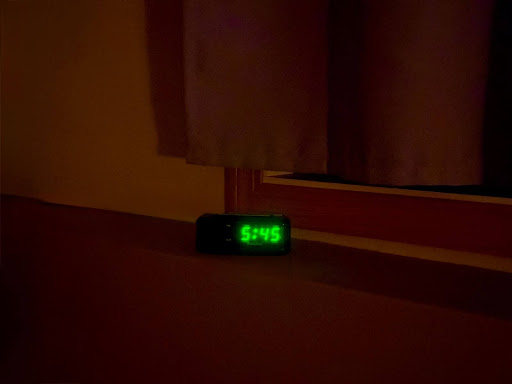
The obnoxious ringing of your alarm goes off at 5:45 a.m. waking you, you get up and dread getting ready for the day ahead of you. Still tired from yesterday, as you try to gain the courage to get in the shower to start the day. The little time you have to get ready flies by, suddenly it’s time to leave and head to school for the day. Numerous hours of the previous night were spent at practice, work, and doing homework, leaving around six or seven hours of sleep to recharge for the next day. You start to question, why can’t we just start school later?
It has been known for many years that teenagers do not get the eight to ten hours of sleep required for proper function during the day. However, it was not until recently that a couple states took action to attempt to correct this. A high school in Rochester, MN changed their start times from 7:20 to 8:30 a.m. in the beginning of the 2024-25 school year. Teachers and staff from the high school in Rochester say, “A greater number of students were more alert during the first two periods than they had been with the earlier start time” (National Academy of Sciences, 2024). When students are more alert and awake they have a greater tendency to participate in class which can create great classroom discussion and tons of potential active learning. Suppose high schools began to start slightly later, around 8:15 a.m. The majority of students would have around seven hours of free time they could utilize after school for activities such as jobs, hobbies, sports, clubs, and most importantly homework and sleep. Students would be able to create a more stable balance between school and after school activities. Ultimately, teenagers will have more flexibility with their sleep schedule allowing many kids to get the required amount of sleep each night.
A quantity of studies show less than 25 percent teenagers get the eight to ten hours of sleep needed each night. According to survey data collected by the U.S. Centers for Disease Control and Prevention “In 2023, 22% of female high school students and 25% of male high school students reported sleeping eight hours a night” (Blad, 2025). Numerous people ask why can’t kids just go to sleep earlier? Unfortunately it is not that simple. The American Academy of Sleep and Medicine has found that “Teens’ bodies secrete melatonin, the hormone that triggers sleepiness, much later than adults, affecting their daily rhythms.” (Blad, 2025). Melatonin can be secreted at least two hours later in teenagers’ bodies than in the average adult. Though, this cycle can come in quite handy when it comes to matters such as homework and sports, but for sleep it’s the exact opposite. Many school districts have hardly taken this issue into consideration, and despite several recommendations from the American Academy of Pediatrics, the majority of high schools start 20 to 30 minutes earlier than suggested, making it even harder for students to be well rested throughout the day.
From the perspective of the school district, an abundance of consideration is required to permanently create a change for the daily schedule. Bus routes would need to be adjusted, the whole daily schedule would undergo changing and it would take a great deal of time to thaw out a plan that would accommodate each school. The change could possibly add stress on parents trying to find transportation methods for their kids if they live outside of the district. It could also overlap with their work schedules, creating more difficulties. Other districts that have experimented with late start have found it was much easier to adjust the start times district wide to satisfy the busing schedules. Furthermore, the districts may have trouble finding transportation for students involved in sports and other after school activities that require them leaving school for events. The authors of Frontiers in Sleep, Vol. 1, have suggested “Districts may need to get creative, adjusting sports timetables when playing districts on different schedules” (Meltzer, 2022). If districts become serious about adjusting their start times, there are various concerns that will require adjusting until a final schedule is completed. Nevertheless, there is plenty of research that shows the change will be well worth it in the long run.
While districts ponder adjusting the daily schedule, students continue to be tired throughout the day. “Until society does a better job prioritizing sleep, kids will continue to be under-rested. But in the meantime, changing school start times will be the single biggest way to help the greatest number of adolescents to get the rest they need to thrive” (Meltzer, 2022). Is putting the district’s convenience over students’ well-being truly the best way to go about this issue?