




















































TLDR: Essentially, college is a great opportunity full of resources, but it can also be incredibly confusing and difficult to navigate if you do not know what you’re getting yourself into. The best way to go about college is by starting research early, and figuring out what is best fit for you before it becomes too nerve-racking.
STEVENS POINT, Wisconsin – College is a big step toward a future you want to create. But the idea leaves many people uneasy with questions. Some common questions surrounding college are the classic when, where, and why it’s beneficial, as well as how to choose a college and, even broader, a career best fit for you. This article isn’t written to persuade you to go to college, or to insist that you HAVE to go at a certain time or you won’t succeed in life, because after all, education is education, and it’s YOUR choice what you decide to do after high school. Instead, this article was written to educate you on the benefits of college and how to navigate it. By the end of this article, I hope the idea of college feels just a little less intimidating.
Why should you go to college?
I know I said this article wasn’t to persuade you to go, but if you’re still on the fence, or can’t see past the financial aspect (we’ll touch on that later), this may be the push you need. At Metropolitan State University of Denver (MSU), administrators believe “college is the perfect place to gain independence and develop your identity” (MSU, 2022).
First and foremost, college helps you pursue your passions. For some people, they know exactly what they like and what they want to do after high school, and college is an immediate step in the direction they plan to go. Many colleges offer an incredible number of courses that fit nearly every career known to man, so there’s no need to feel limited to taking just one course. College can provide people with the freedom needed to explore what they want. Obviously, in high school you don’t have the time to explore every career path, so it offers a narrower field of education that appeals to you and your goals.
Remember that college is– above all– a place to find yourself, and even if you have absolutely no idea what you want to do, you can figure it out along the way. College is often associated with a set path, set majors, and a clear goal, but that is not always the case. Professionals at MSU Denver, on a mission to end the stigma around post-grad education, write, “College can also be a helpful steppingstone if you are unsure of what you want to do with your life,” including that taking a variety of courses can help you narrow down what path you really want to go into.
Secondly, college allows you to meet new people, build important relationships, and gain experience. College is essentially a network of professionals and opportunities that you would not be exposed to anywhere else, offering a diverse population of people that can shape your worldview. Even if you don’t instantly connect with anybody, most colleges offer a wide range of extracurricular activities and programs that may be up your alley, and can help you find people with the same interests as you.
Some of the programs offered at numerous colleges include internships, art programs, community service, choir and band, student council, college prep courses, and a wide variety of sports like football, tennis, and cross country. These programs and extracurriculars can help you find your passions even if you aren’t sure what career you’d like to go into, and can help you find (or develop) skills you didn’t know you had. Involvement in activities can spark teamwork, and boost you along in discovering your identity, especially if you join things you never knew you were into before.
Aside from the programs and extracurriculars, college provides insanely helpful resources you can use at any point in your education. One example is the expansive libraries provided by many colleges. Close to home, UW Madison has the 12th largest library in the entire United States, with an ever-growing collection of nearly 8.5 million books. Along with the extensive amount of books, they offer studying spaces, trivia programs, and several academic and book clubs hosted in the libraries (UW-Madison, 2025). Career centers are another helpful tool that can help you along no matter what stage you are at in life, exploring your skill sets, career options, and offering preparation for professional life.
Of course, the higher salary college can often promote is an enticing benefit. A statistic by the Bureau of Labor Statistics shows that on average, bachelor’s degree holders earn about 86% more than those with just a high school diploma (APLU, 2022).
College provides a multitude of “soft skills” that can help you not only in an educational setting, but in a professional setting as well. Some of these skills include leadership, team work and social skills, time management, and adaptability. College is the best place to build motivation and responsibility.
Education is a privilege, and if you have the opportunity to go to college, you should take it. Not only do you learn essential skills, meet new people and receive new opportunities, you get a chance to explore who you are as a person, and how you can build off of your own skill-set to create the life you want to live.
When should you go to college?
You know the why, but what about the when? Let’s start with the path many people follow– going to college directly after high school. The transition from high school to college is a big change, but a lot more seamless than that of someone who decides to go later. Mrs. Reid, an English teacher and former counselor at SPASH, believes that for many people, it may be hard to “get back into it”, when you start college at a later time. Katelyn Fahrenbruck Weston, a Journalist at the US Career Institute, writes, “For many people, it’s best to enter college right after high school because the material they’ll build upon in their college education is still fresh in their minds” (Weston, 2025). Many current careers require degrees, meaning that after graduation, you’ll have a broader field to work with. Going to college after high school and receiving a degree, as stated by the US Career Institute, “makes students more competitive in the job market and qualifies them for careers that let them follow their dreams and build the life they imagined” (Weston, 2025). An earlier degree is also more likely to provide job security, due to the fact that a majority of employers look for people with degrees and experience in their field before any other option.
However, it’s a common misconception that college is only beneficial if you go directly after high school. While attending after high school has its benefits, it’s not the only way to go about it. Actually, according to the US Bureau of Labor Statistics, about ⅕ of college graduates are “late bloomers”. What defines a late bloomer? A late bloomer is a college graduate after the age of 30, compared to an early graduate, who typically graduates in the few years ensuing high school. Despite being significantly underrepresented, late bloomers have actually made up a large amount of the skilled work-forces, and since 1960 have created a diverse population in the workplace in correlation to the increase of women, hispanic, and black individuals earning a degree (Barany, 2023).
There are many reasons you’d be a “late bloomer”. You may have taken more time to find your path, traveled the world and developed deeper talents and passions, or maybe you couldn’t afford college immediately after high school. Either way, don’t feel alone– being off the beaten path doesn’t mean you won’t have as many benefits as an early college graduate. Late bloomers tend to have an increased understanding of themselves, and therefore clearer goals– meaning you save time and money for yourself by not changing courses and spending unnecessary money for switching your major too late. Around 30% of traditional college students change their major within 3 years, according to Bernard Grant, a Psychology and Counseling specialist who taught at the University of Cincinnati. You may have an easier time managing college and its responsibilities, with the extra life-experience you have, and it may be easier to afford, provided you have a job already. Grant also claims late-bloomers are linked to a higher chance of long term success. Ben Karlgaard, a current journalist, author, and former late bloomer himself, wrote a book that argues the fact that societal pressure to get achievement early on is what is harming the outlook of the world, as people have different “timelines for success” (Karlgaard, 2019). Karlgaard emphasizes the importance of gap years on not only mental and financial health, but spiritual health as well. He writes that early achievement puts pressure on younger individuals, and that it’s “not the appropriate path for everybody” (Knowledge at Wharton Staff, 2019). To emphasize the extent to which going to college because of societal pressure can affect you in the long run, Apollo Technical, a large Engineering recruitment agency, created an article about the facts of career changes as of 2024. On a regular timeline, a poll found that around 52% of Americans are considering a career change, and 44% of them already have plans set in motion. While career change can be a broad term, the US Bureau of Statistics did a study and found that 29% of people completely change their field of work since starting their first after-college job (Apollo Technical, 2024).
How do you choose a college that supports you and your potential career (and make sure you can afford it)?
Despite the massive selection of over 6,000 colleges across America alone, choosing a college is not as daunting of a task as it seems. As described by Mrs. Reid, when asked for general college advice, “College is about the learner, what they want to get out of it.” (Reid, 2025). She makes the point that college can be an excellent time full of new experiences, or it can be difficult and unfinishable, depending on your outlook. If you think about what you want to get out of the years you spend in college, what you want to pursue, you’re likely to succeed. There are two major factors that go into choosing a college– defining your goals and expectations, and doing your research.
What exactly does “defining your goals and expectations” look like? First, you need to ask yourself some important questions. What do you value the most about a college education? What courses are you interested in taking? How far away from home are you willing to move? What are your career goals? Once you’ve narrowed it down to a few colleges, question whether they offer helpful programs, if they’re considered strong in your desired field of work, or if they provide a challenge. Chances are, if the field is not considered an important or strong one where you plan to go, your career will not be as augmented. Some other crucial factors to consider are size, location, housing opportunities, and extracurricular activities.
Doing your research is another important part of choosing a college best fit for you. Look into websites of the colleges you’re interested in, or other websites dedicated to helping you integrate into the workforce, such as Unigo, Collegeboard, Niche, and College Navigator, that serve primarily as a “Yelp” for different colleges. Alternatively, ask people close to you for advice, attend local college fairs, or see different college advisors in the career center. Being prepared is the best advantage you can have.
Don’t let yourself feel limited by budget, either. As of late, the idea of spending an insane amount of money on an education seems unjustifiable, but there are many affordable options that can help you get an education without breaking the bank. One well-known way to save money is by attending a community college. Community colleges receive money from the state– meaning lower tuition rates– and are often within living distance, so there is no need for meal plans and housing. Along with community colleges, there are tech schools, which favor practical skills, provide more hands-on learning, and can often get you a degree in only two years. Even many online schools are cheaper than a traditional four-year out of state University. Apprenticeships are another good option, providing you with education and a job at the same time. Apprenticeships are especially valuable for people who value a kinesthetic learning style, while still getting paid for the work you do. Other opportunities to look into include the Free Application for Federal Student Aid (FAFSA), which can grant you financial assistance for your education, or Pell Grants, which can offer you federal aid based on income and financial need while not requiring you to pay it back later.
How do you choose a suitable career?
In a world where many people have already figured out what they want out of life, choosing a career path can feel overwhelming. The biggest thing to remember, according to McNeese State University in an article about tips to choosing a career, is, “While choosing a major in college can give you direction on what courses to take and where you may end up in the future, it’s just a starting point” (McNeese, 2025). It is OKAY to not know what major you want to pursue right away, and it is OKAY to change your major, because nothing is set in stone. Mrs. Reid, a well-loved English teacher, was even going to go to college for business with the plan to own a golf course! That was, until she visited a guidance counselor and discovered that she was passionate about English and the prospect of helping children in their education, and wanted to pursue it further (Reid, 2025).
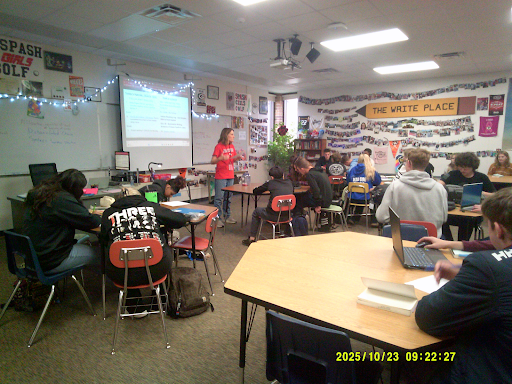
Visiting the guidance counselor about potential careers is a great way to discover what you enjoy doing the most. Just ask Mrs. Reid! A few years into teaching, she spoke with a counselor at Marshfield, and decided that she enjoyed it and wanted to follow the path herself, eventually getting a bachelor’s in psych, and a master’s in school counseling. Guidance counselors provide excellent advice that can move you along in your decisions, and provide the support you need.
Other essential factors are the classes you take in high school, your hobbies, passions, and extracurriculars. What you do in high school can really shape you as a young adult. If you’re still unsure, taking quizzes, considering your learning style, and doing internships are other ways to discover your interests.
Internships are short-term work experiences typically assigned to a student that introduce them to a field of work, while meeting with professionals and learning at the same time. The best thing about internships is that you don’t have to stick to one for the rest of your life! It gives you the chance to figure out what you don’t want to do, so you don’t choose a job and end up spending thousands of dollars on tuition only to hate it. Internships are widely varied, some paying a significant amount– like tech and finance– while others pay none at all– like fashion or art. Internships can seem difficult to obtain, but actually are fairly easy to come across. Going online is always an available option, as many company websites have options for internships, or you could go to websites such as internships.com or WayUp. If you aren’t finding anything down that route, many colleges offer guides to help you get an internship as well (Zhang, 2024).
Again, the most important part is to do your research. Researching potential career fields may be even more important than researching colleges. Some questions to debate before choosing a potential career– what degrees are required to get into the field, how long would you have to be in school, what are the requirements for the job, what is the distance from home you may have to travel, and the typical annual salaries for positions in that field.
Choosing a career can feel taxing, but with a good support system, it can greatly reduce the stress associated with looking toward the future.
Why should you get multiple degrees?
You’ve likely known someone in your life who has gone back to college, either to change their original path, expand on it, or just because they like learning. But why do many people go back to school when they don’t need to? Viewing college as a “have to” instead of a “get to” is the biggest mistake. Having the freedom to get additional education is incredibly significant for our time– a freedom that our ancestors were sparsely given. According to census.gov, 13.1% of the adult population has a second or advanced degree. Advanced degrees are typically education beyond a bachelor’s degree for specialized skill sets or advanced careers such as the medical field (Michigan Tech, 2025).
Having an advanced or second degree can increase your career opportunities, expand your knowledge, and broaden your skillsets. Mrs. Reid has an astonishing four degrees– a bachelor’s degree in English and in Psych from Luther college, a master’s degree in school counseling from Concordia University, and just recently attended an online college to obtain her master’s degree in English, with the purpose of teaching dual enrollment at SPASH. Not only is Mrs. Reid an excellent role model, but she is an excellent example of choosing degrees that support your current degree/s, and achieving bigger goals because of that. In her opinion, her latest degree was “more enriching”, due to the past experience and increased writing ability (Reid, 2025).
Having multiple degrees can allow you to “climb up the ladder” in your career, and can therefore allow a higher earning potential, as well. People with more than one degree prove that the human mind is always learning and adapting, and that the more educated you are, the more you’ll get out of life.
Additional Info to understand:
Many colleges offer– or require–general education programs (gen eds.), which are oftentimes considered more important than any other courses, as they teach you necessary skills that employers look for, and are often thought of as expansions on the classic subjects of math, science, english, and history, as well as a course usually called “humanities and social sciences”. Humanities and social sciences focuses on cultural and behavioral aspects of humankind, and strengthen skills such as empathy, critical thinking, and communication. While many see no reason for gen ed. programs, they are important for building not only the skills needed for your particular career, but for personal life as well (SNHU, 2024).
I hope that the points I’ve outlined have helped you feel a little more confident among your decisions surrounding college. The key takeaways from this article are that college is a place to discover yourself, and most importantly– do your research, define your goals before it becomes stressful, and have a high-quality support system that can help you along on your educational journey. Remember, it’s cool to be educated, no matter how you achieve it.