



























“Some say we shouldn’t worry about the words, just the way we treat people. But if you think about it, what you call people is how you treat people. If we change the words, maybe it will be the start of a new attitude towards people with intellectual disabilities, and they deserve it.” In a Special Olympics video, 14 year old Nick Mercellino made this statement at the signing of Rosa’s Law in 2009. This law replaces the federal usage of the”r slur” with ‘intellectual disability’ or ‘person with an intellectual disability.’ Previously, the use of the slur in a federal context made it easy to justify using it in everyday life, but this slur “perpetuates that people with disabilities are ‘less than’,” Meagan McGoldrick stated in an interview. McGoldrick works at SPASH with students with intellectual disabilities. People are people, why should uniqueness make somebody feel as though they are less of a person?
The “r slur” is more than just a word, it is a catalyst that makes an entire community feel polarized.
We all need to be more cognizant of the language we use, to do our absolute best to be kind to everybody. Putting labels on people forces them into a box they feel they can’t escape, calling somebody the “r slur” can make somebody feel as though that is all they are. That is a feeling that nobody should have to deal with. People with disabilities, intellectual and physical, are not defined only by that part of them.
“What we say to others, makes them or breaks them,” states Nyasha Derera of Special Olympics.
How Words Change
“Let’s rewind to 1961. ‘Mental [r slur]’ made its debut as a neutral medical term for people with intellectual disabilities. But it quickly became a cruel insult, carrying the weight of discrimination and prejudice.” This quote was published from an article from The Arc, the largest community-based organization in the U.S. advocating for and with people with intellectual and developmental disabilities. This information shows that the intention of this word was not cruel, but the world can be. This umbrella term quickly turned into a slur to use against those with disabilities. It was when the word became synonymous with words like “idiot” or “moron,” that the meaning changed entirely. Knowing this, we can see the increasing importance of staying up-to-date and educated on the language we use everyday. Words and their definitions change, just like everything else in the world, so we need to make sure that the words we say are appropriate and kind.
We all make mistakes, but learning from them is what matters.
In the present day, we see this happening with words like ‘SPED,’ A shortening of ‘Special Education,’ created to efficiently communicate with teachers but has now evolved into almost a substitute for the ‘r slur’ for some individuals. Speaking with Kaylei Kress, another teacher at SPASH who works with students with intellectual disabilities, we discussed the usage of the acronym in places around SPASH. She states “It’s like the new substitute for the R word… Yeah I don’t like that.” The way the acronym has been used negatively in recent years has completely changed the way people view it. Kress concludes, “Instead of saying the r word they say they’re SPED… when they say SPED [people] it sounds negative because of how people use that.”
“Sad, it’s frustrating that there are people still putting a label on other people in that way… it’s mean,” Kress stated when asked how the r word makes her feel. “When disability is framed as a lack, limitation or loss, it reinforces the idea that people with disabilities are inherently incapable.” Lieke van Heumen, a clinical associate professor in disability and human development at the University of Illinois, Chicago, told CNN.
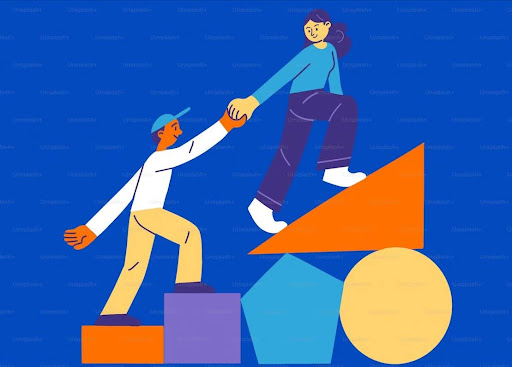
Image by Gestopo Galang
Why the Comeback?
CNN reports that within the last couple years, the utilization of the r word has had a sudden increase. Influential people have integrated this slur back into casual vocabulary, making their followers think that it is okay to use.
When I asked Kress if she had heard an uptick in the word being used, she responded, “Now that I think about it, yeah I have heard it being used more. The other day I heard it being used in the hallway and it honestly shocked me.” McGoldrick shared that sentiment, adding that “Normally [The ‘r slur’ is not] used with a malicious intent, it is just used because they don’t understand the ramifications of the word.”
Nina Marcellino discusses her perspective on this issue in a Special Olympics video, saying “I kind of wish that we weren’t still talking about it, but I think we still need to, because we still hear it, we still hear the word. I think in that respect it’s really important to keep talking about Rosa’s law and the power of language.”
The fact that this word has made a comeback is an issue for entire communities. If nobody tries to stop the resurgence of the r word, where will the reawakenings end?
Image by Illo Design
What Can We Do?
McGoldrick states, “I try to keep my classroom safe for my students, and that word does not make people feel safe.” Later on, we discussed effective ways to stop people from using the ‘r word,’ like teaching empathy. In a CNN Interview, Adrienne Massanari, an associate professor at American University, agrees that “The resurgence of the r-word is symptomatic of a graver problem — the ‘apparent death of empathy.’” Educating students on what this word means and how it stigmatizes an entire community makes them really think before they use the word. Kress says it is also effective when students teach each other; people tend to listen more to their friends and peers than to the ones in charge.
The best way to reduce the usage of this word is to prevent it from the very start. A quote from Kress stuck out to me; she states, “If my own child asks me what a word means, I’m not going to just go don’t say it. I’m going to say what that word means, do you want someone to hear that and have hurt feelings?” Kress phrases this lesson in a way anybody could understand. Kids tend to use language they hear without thinking about what it means, they’re kids! Instead of taking the easy way out, saying ‘it’s a bad word,’ it is more effective to teach the meaning of the language being used, and the effects it can have on others.
I write to you, Dear Reader, to present the damage the ‘r slur’ has caused. We need to see how as a society we are hurting people more than we know, just by the language we use. The world can be cruel, but does that mean we have to be?