






































Have you ever thought a rule was so stupid, you didn’t even try to follow it? Maybe it was stupid, maybe it wasn’t. But we are going to focus on whether it was right to disobey the rule, or if it would have been better to just stick with it anyway. What makes a rule, regulation, law, instruction, standard, axiom, practice or convention followable? Should they even exist? Would anarchy be positive for society? Why were rules made? Are the answers the same for government and laws? Don’t worry, it won’t be as boring as it sounds. Included are a few perspectives that you could relate to and understand. First, non-rule-followers, why disobedience?
Reasons for disobedience
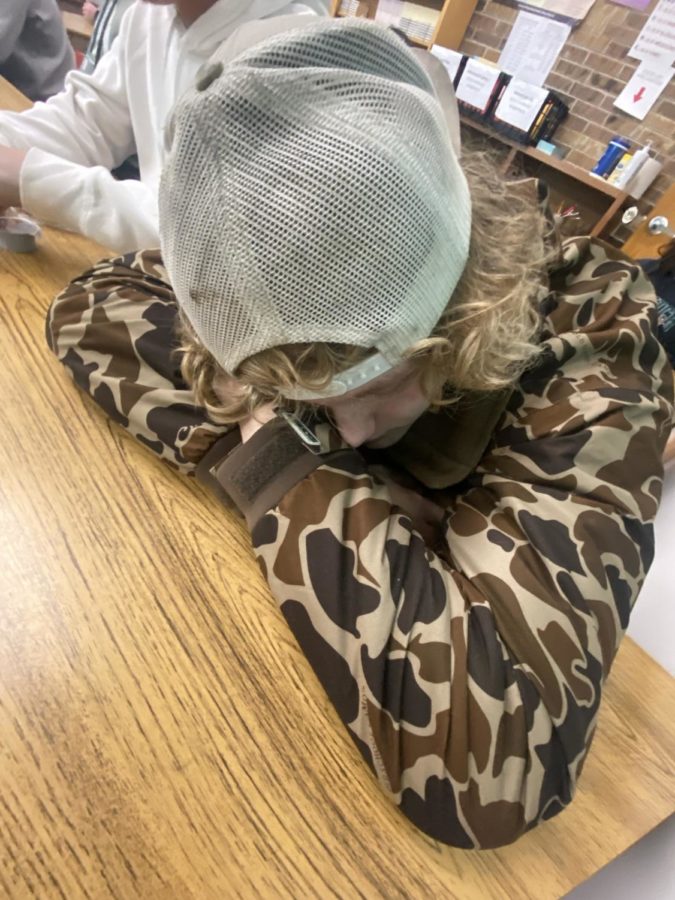
Among teens, disobedience and delinquency are mostly caused by peer influence. Teen peer groups are often associated as the cause for delinquency. Often, students feel that being defiant is viewed more favorably by peers, which leads them to take more dangerous, risky, or rebellious actions. However, researchers have found that teens may not have less risk-evaluating ability. Rather, it is social pressures that convince teens to weigh instant gratification over possible future risks, like recklessness.
There is an important mental process called “working memory.” It is the information processing center for moving ideas from active thought to memory. However, our working memory has limits on how much it can hold before moving items to memory. In an article on the government website, PMC, UNC Eshelman School of Pharmacy students Sabrina Dunham, Edward Lee and Adam M. Persky wrote, “Because working memory capacity is limited, a person’s ability to follow instructions may be impacted if the instructional load is greater than that capacity, ultimately leading to information loss (for more information, explore cognitive load theory).”
Imagine a new law was just passed in which every morning, as soon as you wake, you had to do 30 jumping jacks or 20 push-ups. Never mind the fact that it would have little impact on society, just imagine that there was a justified reason for the law. Your physical abilities are extremely low during that time of the day, and you may not be able to follow the law. Or you may be able to, but are resentful of it and skip out on it for a few days. This example isn’t very different from your mental abilities. So, complex instructions can be broken for many different reasons, whether it be social reasons or biological reasons, but should they be?
How rules restrict us
We start by taking a look at extremes and narrowing it down from there. The farthest extreme being morally unjust directives, like World War II. WWII was one of the deadliest global conflicts in history. During the period, it was illegal to harbor Jewish people under nazi-occupied Germany. So, would you follow the law in a similar situation in which your morality demanded otherwise? Clearly, no one would like to admit they would. So, we can agree that some rules are not to be followed. But how often do we come across these unruly rules?
Professor of Behavioural Science at the University of Warwick Business School, Nick Chater, wrote on a British series, “Life’s Big Questions,” “We all feel the oppressive presence of rules, both written and unwritten – it’s practically a rule of life.” Whether it’s taxes, HOAs or even getting more chores than your siblings, we all could think of a rule that wasn’t very helpful.
We, as humans, are actually very caught up on the idea of rules, so much so that it is psychologically known that we tend to accept rules and laws as unbreakable, even when they are prejudiced, harmful or wrong. Not only is this the big reason for extensive acts of racism, but also for unnecessary social norms like tipping, beauty standards, small talk and social media posting.
Again from Chater on the BBC, “Restrictions on renovating ancient buildings can be so stringent that no renovation is feasible and the buildings collapse; environmental assessments for new woodlands can be so severe that tree planting becomes almost impossible; regulations on drug discovery can be so arduous that a potentially valuable medicine is abandoned. The road to hell is not merely paved with good intentions, but edged with rules enforcing those good intentions, whatever the consequences.” So, if rules seem to suck this much, why do we have them?
How rules build society
Let’s look at the other extreme. Teens’ brains are known to still be in development until the age of 25, and they require guidelines for better decision-making, or more likely, better habits to continue growing successfully. In fact, we all need guides in many scenarios. We don’t have the capacity to understand the basics of all the rules in our lives, so without them, we won’t be able to make the correct decisions.
Imagine every teenager had to become a firefighter to learn how to safely build a campfire, a biologist to understand how much food their body needs and a lawyer to know what is illegal, all before the age of 18. You may remember the classic terms like Pythagorean Theorem or Mitochondria, but you are much less likely to remember both the proof of the Pythagorean Theorem and the history/specifics of how the Mitochondria works.
This is the idea of how rules help us. Rules allow us to know what the right choice to pick is, without having to remember why it may be the right choice or understand the specifics of why the rule exists. They help us comprehend large, complicated structures that we wouldn’t be able to otherwise.
What is it like without rules? A place with no rules is considered an anarchy. Anarchies are a great example of an extreme point, but not so great at working. People regularly make new rules as soon as one is taken down. If all rules were currently taken down, how many awful new social norms or unwritten rules do you think might sprout up? Would you be comfortable following random rules not founded on years of work?
“Rules about driving on the left or the right, stopping at red lights, queueing, not littering, picking up our dog’s deposits and so on fall into the same category,” says Chater. “They are the building blocks of a harmonious society.” If you didn’t know these rules in our society, you would probably end up injured or worse in a matter of days. Think about it, your life still depends on many of these rules.
Academically, I’d like to give the example of a teacher who is well acquainted with the rules. Peter McAdams is a Social Science teacher at SPASH, teaching two classes I took, Psychology and Social Problems. His students know McAdams as having some of the stricter rules in the school, but if you pay a little more attention, you could tell that they are all intended with respect for his students.
McAdams has one distinct, unique rule in his classrooms. He has no late work policy. Mainly, if it’s late, he won’t accept it, and this kind of rule isn’t found often in SPASH. But there’s one important piece: you have the chance to prove your case in why it should be accepted anyway. McAdams actually encourages his students to meet with him and talk to him about what happened and why they might have missed it.
We call this rule making strategy “treating your students as respectable humans.” It uses a quite important aspect for most humans, basic communication. See, many of his students are working already, and this rule is perfect practice in getting up and making sure your work can be properly accounted for. Even if you don’t like talking to teachers, communication is still an extremely important skill required in keeping a job.
Legally speaking, your rights are even protected by rules. The Amendments, Bill of Rights and Constitution are all examples of rules that protect you. Without these protections, how could you possibly defend your rights when you have none?
These kinds of rules will be some of the most important rules in your entire life, so for the Seniors and even parents of SPASH, make sure you vote in the upcoming Midterm Election this year. And even if you can’t vote for any reason, you still have a voice that can be heard and can help make better laws and government.
What do I do?
Let’s summarize, following rules, understandably, may be difficult at times. Many rules and norms never even made sense in the first place, and often are also harmful and oppressive. However, school rules are probably one of the least understandable to disregard. In fact, having no rules is detrimentally worse for society. Anarchy would almost guarantee the end of society as we know it.
Well, that’s a lot of words to explain that the answer is a balance between accepting some rules and denying others. But that’s what the solution to many of the problems is, a balance. You can never be right staying on one extreme at all times. And when you find a nice balance, don’t keep it to yourself! Share it with the world, get into politics, vote and contact your representatives.
Generally, I most strongly suggest that you follow most of the current rules so that you are here to help us build better rules for our community by being active in the rule making process. I also encourage readers to continue researching. A good start would be reading the BBC article I used in this project, “Could we live in a world without rules?” Or maybe even contact higher management or officials to talk to them about the rules they currently have implemented.