
















































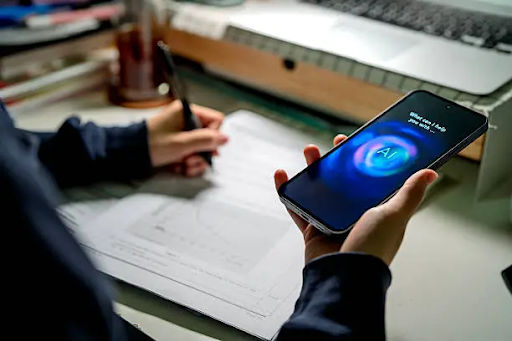
Generative AI is a functional tool used to support daily/important tasks requiring efficiency. Generative AI chat bots and platforms were ‘released’ in 2022 creating a new world of possibilities to different apps and internet web based sites; but what is AI really and what is the significance of this tool?
AI isn’t entirely new, just a new form of use. 2022 is when we first heard of AI but the technology used is far older than the release.
This technology has changed our perception on how we see our future unfolding. Yet there isn’t much on how AI came about in society today.
What is Generative AI?
According to IBM, a website recalling the specific uses of AI, “Artificial intelligence has gone through many cycles of hype, but even to skeptics, the release of ChatGPT seems to mark a turning point. OpenAI’s chatbot, powered by its latest large language model, can write poems, tell jokes, and churn out essays that look like a human created them.” To be more specific, a computer is trained on media and data to replicate texts, images, videos and other content with similarities but isn’t identical to the original media.” And with the rise of gen AI, it seems to be a success.
The possibilities of this tool are growing everyday and people are recognizing the expansion of AI use– it is becoming more popular to add into apps like Duolingo, TikTok, Facebook, Snapchat and other highly popular apps. The rise of AI being in these apps consistently is because of the discussion of AI online and it’s almost like a buzz word that can be profited off of. A new functional tool to get people to spend more time on specific apps.
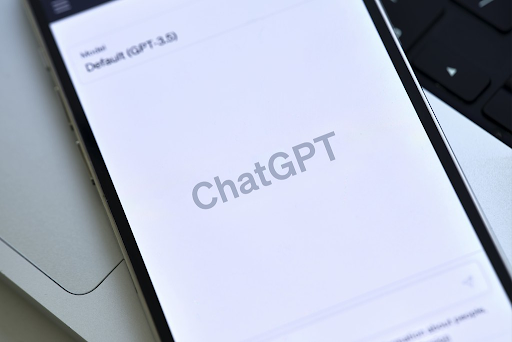
Another highly popular AI tool is Chat GPT. An AI chat bot that creates human-like conversations and assists with tasks like writing emails, essays and other prompts. People see this as “Gen AI can write this out for me quickly”. This is almost similar to Generative AI but they are not the same, throughout this article there will be mentions of Chat GPT and Generative AI.
Training the tool is a lengthy process. IMB’s Article shines the light on how the tool is trained “To create a foundation model, practitioners train a deep learning algorithm on huge volumes of raw, unstructured, unlabeled data e.g., terabytes of data culled from the internet or some other huge data source. During training, the algorithm performs and evaluates millions of ‘fill in the blank’ exercises, trying to predict the next element in a sequence e.g., the next word in a sentence, the next element in an image, the next command in a line of code and continually adjusting itself to minimize the difference between its predictions and the actual data (or ‘correct’ result).” This paragraph is pulled from the article on how this functions and what specifically they are training AI on and how intuitive AI can be.
Another point made by IBM “Generative models have been used for years in statistics to analyze numerical data. The rise of deep learning, however, made it possible to extend them to images, speech, and other complex data types…”
Opinion on AI use
Most sources are divided on the opinion of AI usage. The benefits and unfavorable sides of AI use make it difficult to coincide with one opinion.
For example, The Brookings Institution, a source that focuses on life events and news topics, recognizes that there’s a possible opportunity to use gen AI, but a rising concern for the threat amongst regular use of this tool in daily life.
The Brookings Institution vocalizes “From finance and healthcare to national security and criminal justice, AI has already resulted in “profound” applications in an array of public and private sectors, improving efficiency and effectiveness beyond what humans could accomplish alone.” and this makes a great point in what AI could accomplish but some sources may argue that the cons outweigh the pros.
The U.S government accountability office does make a great point on how AI use is especially important in aspects like customer service and certain careers but the rising concern of electricity and water being consumed by these data servers are starting to raise more concern behind AI.
For example, “Generative AI could dramatically increase productivity and transform workloads in many industries. It can be used to respond to questions in customer service chats, create schedules, summarize information, produce Internet content—and more.”
The article also mentions the issues we can’t turn a blind eye to, like the e-waste of the equipment, a specific quote from MIT Technology Review “Generative AI could account for up to 5 million metric tons of e-waste by 2030, according to a new study. That’s a relatively small fraction of the current global total of over 60 million metric tons of e-waste each year. However, it’s still a significant part of a growing problem, experts warn.” The parts used to make these centers for AI although data centers have kept the exact waste unclear; this can cause fatal risks to the environment and human life.
Another Quote mentioned by The U.S Gov.accountability office highlights a significant statement: “However, definitive statements about these risks and challenges are difficult to make because generative AI is rapidly evolving, and private developers do not disclose some key technical information.”
There’s a concern surrounding the natural bias gen AI tends to lean on when it is being trained by data, lack of accountability around work and U.S gov. Acc. office points out in their article and that is something we do need to consider when using AI
Another important quote from the source also mentions “… Additionally, generative AI may displace workers, help spread false information, and create or elevate risks to national security. The benefits and risks of generative AI are unclear, and estimates of its effects are highly variable because of a lack of available data. The continued growth of generative AI products and services raises questions about the scale of benefits and risks.”
Latanya Sweeney suggested a point from Harvard “When we think about the future of the internet, I would guess that 90% of content will no longer be generated by humans. It will be generated by bots,”
Another quote taken from the article that shines a light on chat GPT use “Dustin Tingley,…Agrees, “the breadth of things that ChatGPT is able to do is stunning.” Although the points are divided, it gives a perspective on how different highly important people see AI developing into something more.
Other highly important staff were interviewed on how education could suffice with AI use. Rebecca Nesson makes a great statement on how to accommodate AI in school, exams and other education related situations. Bringing attention to “…If we don’t transform education in a way that helps our students, then we’re not succeeding as educators.” This is an excellent point. There’s a fear that AI dwindles critical thinking skills and trying to teach students how to properly coincide with AI but not taking away that skill is something that educators should zone in on.
Sweeney suggests another significant point revolving around gen AI “…In a world where computers are enabled with the ability to make decisions big and small, Sweeney is most concerned with maintaining control over our lives and society even as these technologies change the way we live, work, and play.” She has a wonderful point: if we have computers that decide everything and change our lives, how are we going to maintain control and not let AI completely guide us there?
This same source suggests an ethical point pertaining to how AI use occurs and how to make it more fitting to safer qualities while maintaining the design phase.
And this is a great point, Generative AI still is underway a lot of redesigning and functioning on how it can ‘attach’ to your lifestyle and making it work safely and efficiently.
Lastly Sweeney’s last point on the future of AI, concluding, The future of the internet may consist of bot-generated content, trained by humans and other bots, she states the concern for what may be real and is wholeheartedly the truth without bias or misinformation being spread from the generated content and that is something extremely significant to consider with the rise of generative AI.
Brian Kennedy from Pew Research Center shares a good point on how the future can impact AL usage; for example, “Artificial intelligence tools are now playing a role in many aspects of life and society, spanning politics, the arts, work and beyond.”
Pew research center has a few takeaways to consider moving on, this concludes, People are more concerned on how much AI is pushed in their lives, and they share they want more control. The scare of how critical thinking skills, creative drive and social skills might deteriorate if they rely on something like AI there’s a few other takeaways like people are concerned over not being able to tell if a picture is AI generated or not but there’s a large percentage willing to let AI guide task in their life.
Pessimism is on the rise with adults surrounded by gen AI and how it is being used
This quote shares the results on how people see AI impacting certain tasks. “Far more say AI will worsen rather than improve people’s ability to form meaningful relationships (50% vs. 5%). One-quarter say AI won’t make this better or worse.”
Most people share that they are dissatisfied with using AI in creative output and relationships. However, people shared that they are satisfied with AI use when it comes to critical situations.
Another point made is, a lot of American’s feel unsure how this can be better or worse for these variable situations and this interesting pertaining to how AI conversations are usually black and white online, either stating that AI can be used for good or that AI shouldn’t be used to write emails or suggest prompts while taking data. “Notably, sizable shares of U.S. adults are uncertain about these questions. Between 16% and 20% say they aren’t sure about whether AI will have a positive or negative impact on these human skills.”
While in this study Americans are asked how aware they are of AI use and what their attitude is around it. “And more than half of Americans (57%) rate the societal risks of AI as high, compared with 25% who say the benefits of AI are high. When asked to describe in their own words why they rated the risks as high, the most common concern mentioned was about AI weakening human skills and connections.” This quote suggests how Americans really do see it as and that this is important.
IMB in particular states the significant dangers and risks of use of AI. AI is Used there’s a tool to create a way to appeal to climate change and protect. ecosystem related situations but IMB argues that this hinders into other specific security issues with data.
The article states that experts with AI have taken a closer look at the issue surrounding it.
The first reason is bias. Humans are unintentionally biased in certain situations and training the AI with certain data can make the AI unnaturally biased. This can cause harm with misinformation. This is also concerning with specific uses for AI which is, healthcare diagnostic systems, and not being accurate, which can cause harm with humans.
There’s also the great concern of AI tools being manipulated to create harm by cloning voices or creating fake identities or emails used for identity purposes and this can expose important data of individuals threatening cyber security.
There’s a lot of data and privacy being disclosed by AI and these AI data centers need a lot of training data, which can create issues.
What are the more critical points of the article is the environmental impact of AI and how serious that damage can be for our environment and the future of our environment because it requires a lot of energy that is very significant on the carbon footprint and running complex models that require a lot of energy and sky rocking the carbon emissions over 600,000 pounds of carbon dioxide and that is nearly 5 times the average emission of a car over its lifetime.
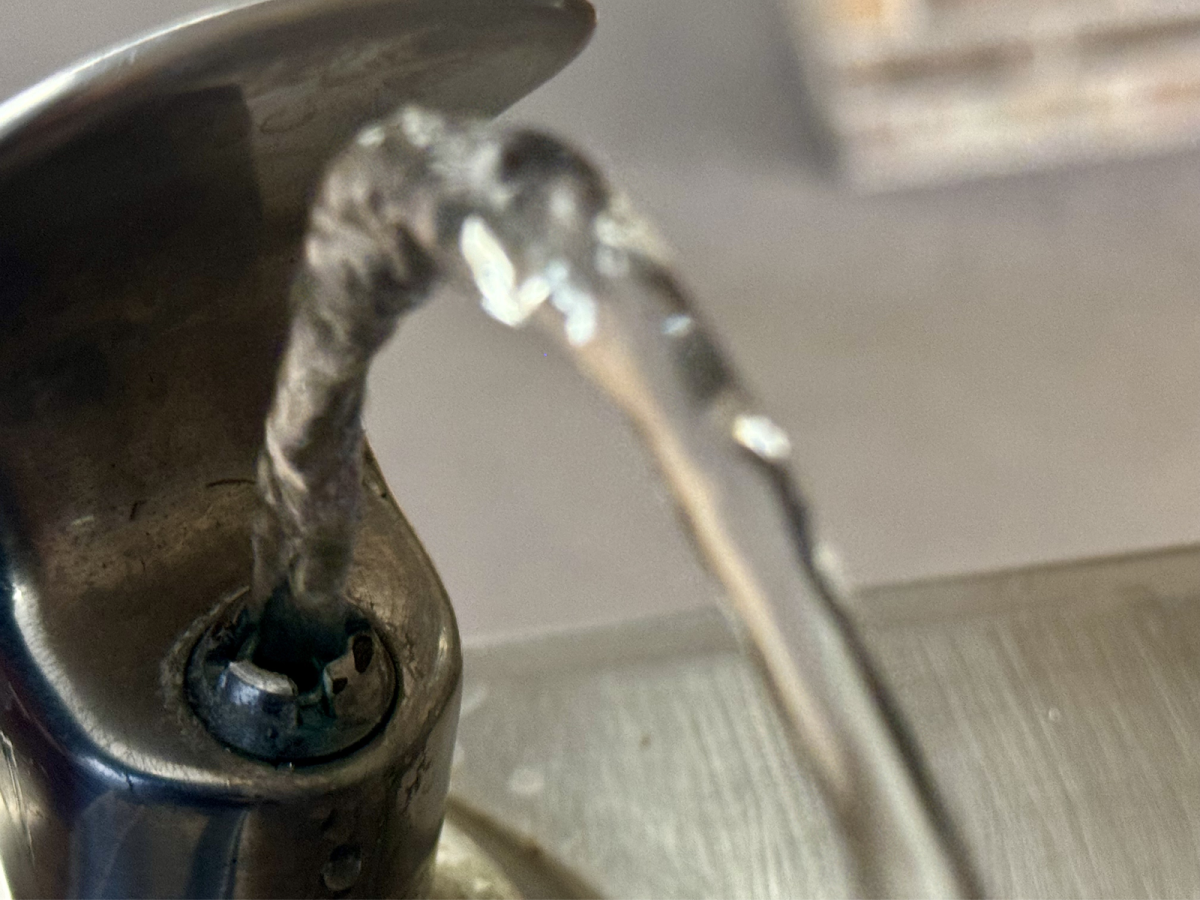
A specific quote from the article is water consumption is another concern. Many AI applications run on servers and data which generate considerable heat and need larger volumes of water for cooling. This is an extremely important segment of this article because of how much water is being used towards AI and cooling the equipment.
A specific quote from this source states a study found that training GPT-3 models in Microsoft US data centers consumes 5,400,000 L of water.
The other significant point is the lack of accountability for AI use and how damaging the decisions of AI can affect certain points mentioned before like, misdiagnosis misinformation and other serious situations that could create harm with AI use.
IBM has another significant mention on generative AI and ChatGPT, which spiraled into worldwide headlines and watched a surge of AI that requires a lot of like adaptations for businesses and companies
A significant quote from the article states that “…Generative AI, specifically the arrival of ChatGPT in 2022 has thrust AI into worldwide headlines and launched an unprecedented surge of AI innovation and adoption
As mentioned before, the future of AI is unknown, we don’t know where its headed, Vanessa Hatfield, A SPASH student, a member of NHS and has concluded a point on how AI could be interacted with in the future. “ I think it’s going to increase in use but the pushback is going to be equal if not, I can see corporations continuing to be “let’s use generative AI” but I also see their communities more specifically their own communities being more like hey actually I don’t support this…”
The significance of AI in the impacts of it on our world have created a divide in the world that must be addressed. Although the impacts AI has made for us either good or bad have been a world changing new tool for everyone to consider. Even though the negative impacts of AI have created a huge divide in whether you should use the tool or not is something we do need to consider and it’s extremely important for reading that you understand how generative AI may give us a new perspective on how we currently use things in our daily lives for better or worse. Do we need a new way to write emails to generate pictures or is this the future of technology?
